Services


Leadership Coaching & Sparring
Most Leaders Don’t Need More Information. They Need a Better Space to Think.
Leadership is isolating — not because you’re alone, but because the people around you have reasons not to tell you what they really think. Peers are diplomatic. Teams manage up. The result: important decisions made with filtered information about your own impact.
Most leaders aren’t short on effort. They’re short on space — to think clearly, to break recurring patterns, and to move from functioning to actually leading.
Good coaching creates that space. Not by being supportive — by being honest. Sparring goes further: direct challenge, real friction, and a thinking partner who is both critical mirror and active accomplice — bringing their own perspective and direct input, not just better questions.

No pitch. No obligation. Just clarity.







BEFORE OUR COLLABORATION
Six Signs You Need a Different Kind of Thinking Partner
You don’t need to recognize all six. One is enough.
Problem
Isolated at the Top
You’re surrounded by people who manage up. The hardest problems — the ones that actually matter — get worked through alone.
Problem
Strategic Clarity Lost in Urgency
You know what’s important. But the urgent always wins. The thinking that matters keeps getting pushed.
Problem
Patterns That Keep Repeating
Something familiar keeps showing up in different clothes. You recognize it. But seeing a pattern from inside it is one thing — shifting it is another.
Problem
Advice That’s Too Safe to Be Useful
Advisors give polished perspectives. Mentors share experience. Nobody says what they’re actually thinking when it might land badly.
Problem
Coaching That Stays Comfortable
Sessions feel good. You leave with insights. But nothing really shifts — because the real challenge was never quite named, and the discomfort was never quite entered.
Problem
The Structural Blind Spot
Every advisor addresses your behavior. Nobody addresses the system producing it — or the personal patterns that have grown around it. That’s the level where things actually change.
The most expensive thing in leadership is the thinking that never gets done. Not because you’re not capable — because there was never a space honest enough, direct enough, and structurally aware enough to be useful.
No pitch. No intake form. Just a real conversation.
ABOUT ME
A Thinking Partner Who Has Seen the System From the Inside
Martin Backes works as a coach and sparring partner for leaders and founders at different stages — from early-stage CEOs building their first team to senior leaders navigating transformation. His approach combines systems thinking with a direct style: he says what he sees, not what’s comfortable to say.
What makes the difference: he doesn’t just coach the individual. He sees the organizational system they’re operating inside — and works at both levels: the structural conditions that produce behavior, and the personal patterns that have developed around them. Because real change almost always requires both.
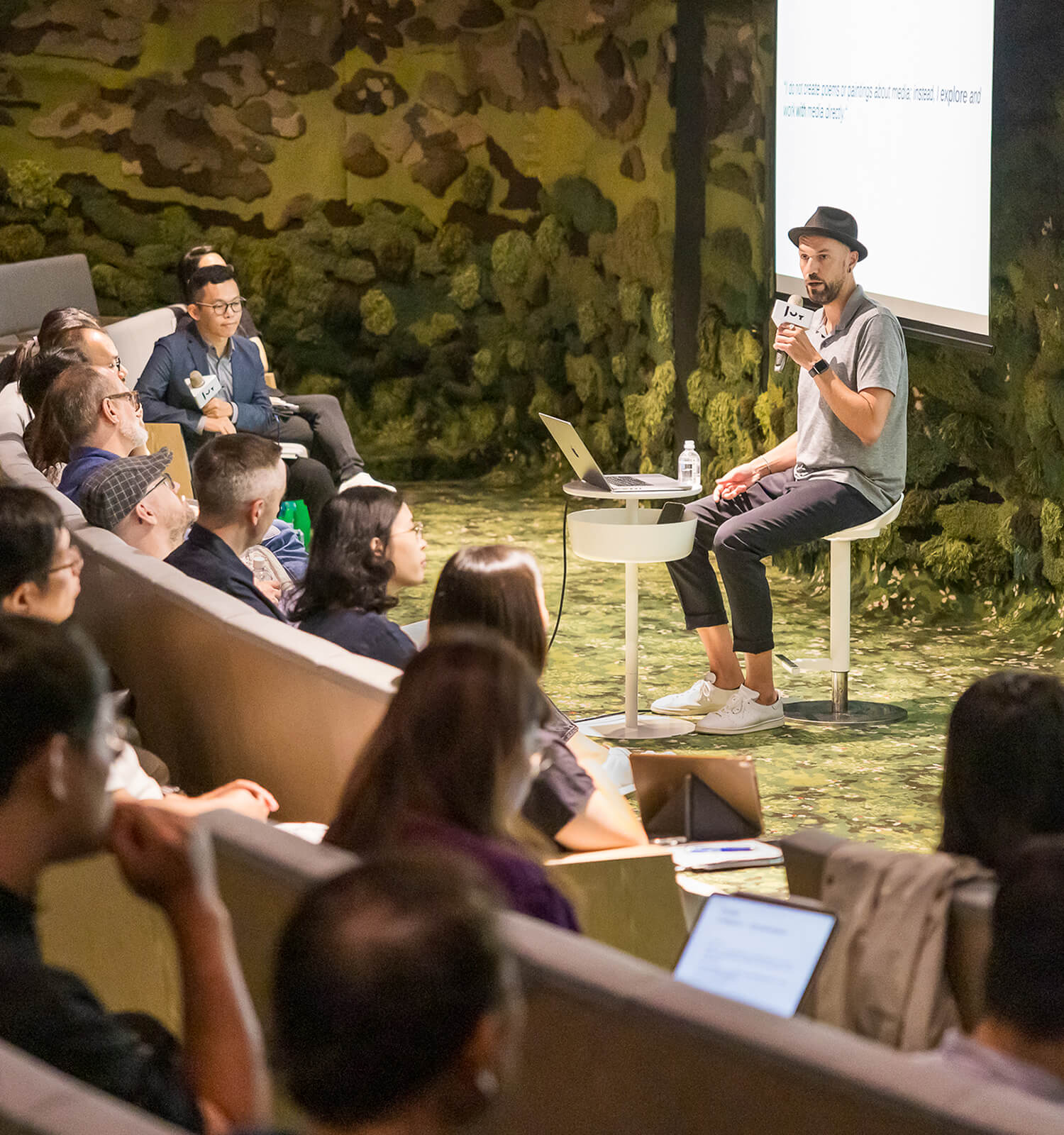
Martin Backes – Transformation Coach, Facilitator, and Sparring Partner. Diplomatically honest — not dishonestly diplomatic.
🥷 10+ years working with leaders across startups, scale-ups, SMEs and global corporations
🧩 Trained in systemic organizational analysis through psychodynamic and systems-theory frameworks
📊 3 companies founded (Design Sprints Studio/Cohive, Studio Martin Backes, aconica)
🎤 15+ years as a university lecturer across Europe — theory meets practice
👨🏫 1,000+ professionals trained, certified, mentored, and advised across workshops, programs, and consulting engagements
🏅 Certified in: Transformation, Change Management, Leadership Development, New Work, Agile Coaching, Scrum, (AI) Design Sprints, Design Thinking, Team Collaboration, Problem Framing, JTBD, and Workshop Facilitation
🥇 German Design Award winner 2021
🎯 Trusted by leaders at Blinkist, XDi, 33A, UVR, UXGA, and others



AFTER OUR COLLABORATION
What Changes When You Have the Right Thinking Partner
Not a new model to memorize. A real shift in how you think, decide, and lead.
Solution
Clarity That Holds Under Pressure
Not just in the session — in the meeting, the decision, the moment that counts.
Solution
A Space to Think That’s Actually Honest
No managing up, no diplomatic softening. Just direct thinking with someone who tells you what they actually see.
Solution
Patterns That Shift, Not Just Surface
You stop recognizing the pattern from the outside. You start responding to it differently from the inside.
Solution
A Sparring Partner Who Doesn’t Need to Be Liked
Not filtered through what others think you want to hear. With honest outside perspective on what’s actually happening.
Solution
Development That Reaches the Real Challenge
Not comfortable insights that leave the hard thing unnamed. The discomfort that actually moves something.
Solution
Both Levels — Structure and the Individual
Someone who sees the system you’re operating in — and the personal patterns that have grown around it.
This isn’t a description of perfect leadership. It’s what becomes possible when you treat leadership as a craft — practiced, developed, improving. Not just endured. And when you have a thinking partner honest enough to help you get there.
HOW IT WORKS
From Symptom to Pattern to Action — How We Work
A Thinking Partnership — Not a Standard Coaching Program.
This is not therapy. Not consulting. Not standard coaching. It’s a disciplined thinking partnership — built around your real challenges, held to high standards, and designed for people who want to move, not just reflect.
You bring the inside knowledge of your situation, your organization, and your context. We bring the outside perspective — diagnostic clarity, the ability to see patterns that are invisible from inside, and willingness to say what others won’t.
Two Formats. One Starting Point.
Coaching is a structured development process — regular sessions over time, working on patterns, blind spots, and leadership capability. The coach guides the process. The coachee owns the direction.
Sparring is different: direct, situational, and faster. You bring a decision, a dilemma, or a live challenge. We think it through together — with honest challenge, direct input, and no diplomatic softening.
Both formats start with the same question: what does this situation actually require?
How We Get From Situation to Clarity

Step 1: Goal — What's Actually on the Table
Not what looks like the problem — what's driving it
We start by understanding the real situation: the context, the history, the patterns that keep showing up. Some issues are structural. Others are personal patterns. Distinguishing the two is often the most useful thing that happens in the first session. Result: A clear picture of what's actually on the table — and what kind of problem it really is.

Step 2: Reality — Honest Assessment of Where You Are
See the current situation without diplomatic softening
What's working, what isn't, and what you might not be seeing from inside. Including what the system around you is producing — and what belongs to you personally. Result: An honest picture of the current situation — at both the structural and personal level.

Step 3: Options — What's Actually Possible
Not just the obvious moves — the ones worth making
We explore real options with direct challenge, honest provocation, and a different frame when the current one is the problem. Not comfortable reflection — productive friction. Result: A clearer set of options, pressure-tested and grounded in your actual context.

Step 4: Will — Concrete Commitments, Not Just Insights
The real work happens between sessions, not in them
We close with what actually changes: specific next steps, clear commitments, and accountability between sessions. Sparring without accountability is just conversation. Result: Concrete commitments that move something — before the next session.
The Structural Lens — What Most Coaches Don’t Bring.
Not just “what are you feeling about this?” — but “what does the system look like from outside?” Some of what feels like a leadership problem is a coordination problem. Some of what looks like a people problem is structural. Some recurring patterns aren’t personal — they’re what any rational actor would do in that system. Distinguishing those is often the real work.
TESTIMONIALS
Hear It From the People We’ve Worked With


Martin Backes brings clarity to complex teamwork and leadership
I brought Martin Backes on board for the UX Growth Academy (UXGA) to create two new learning modules: communication complexity in teams and overcoming silo thinking. Martin brings rare expertise, structural clarity, and real innovative thinking. He has a sharp sense for team dynamics and knows how to make complex topics immediately usable. His work strengthens lasting collaboration. Our course "Designing Influence" gained real focus and impact through his contributions. Participants told us they felt more confident communicating and stronger in their teamwork. I recommend Martin to anyone who wants to genuinely rethink teamwork, communication, and leadership—not just tweak it. His approach to clarity and collaboration creates effects that last well beyond the course itself.
From complex AI challenges to promising pilot projects
I recently collaborated with Martin Backes on an AI Design Sprint® for a prominent German energy service provider. Martin is very open and refreshingly uncomplicated, which makes him incredibly easy to work with. His expertise in innovation facilitation and his structured, calm approach were instrumental in helping the teams navigate complex AI challenges, ultimately leading to the definition of promising pilot projects. His ability to create momentum, foster interdisciplinary collaboration, and keep diverse groups aligned stood out throughout the session. I highly recommend Martin to any organization looking to drive innovation, improve collaboration, and bring clarity to complex topics — thanks to his tech-savvy expertise, proactive mindset, and sharp toolset.
This is what lasting organizational change feels like
Working with Martin Backes was a turning point for our organization. He helped us build real structures for leadership and collaboration, not just better meetings. Our team became more autonomous, decision-making got faster, and the dynamic shifted in ways that have lasted. If you want lasting organizational change, not a workshop high that fades after two weeks, Martin is the right partner.
From strategic fog to German Design Award
Martin helped us align our leadership team around our vision of becoming a worldwide-leading audio product. What would have taken months of back-and-forth took days. Over the following eighteen months, he stayed with us as a strategic partner, coach, and consultant, helping us navigate the execution and keep the team aligned. He brought the right structure to get a complex stakeholder group moving, and the results spoke for themselves. We executed, shipped, and won the German Design Award in the process.
Our go-to coach and trainer for years
Martin has a talent for explaining complex concepts in a clear and simple way, whether in UX, product strategy, design thinking, agile methods, or usability. He is skilled at tailoring programs to meet the unique needs of his participants and clients, providing actionable and practical takeaways for immediate application. Martin has been one of our go-to trainers and coaches for many years, and for good reason. I highly recommend him for any corporate training or facilitation role. He is an exceptional coach and trainer, and a valuable asset to any organization.
Martin is an exceptional mentor, teacher, and workshop facilitator
Martin is an exceptional Design mentor, teacher, and workshop facilitator. He has a remarkable talent for engaging and motivating his students while equipping them with the knowledge and skills they need to succeed. As a creative and dynamic instructor, Martin is constantly seeking new ways to make learning fun and engaging. His passion for teaching and his commitment to helping his students reach their goals is unparalleled. He is a great asset to StartSteps, and I highly recommend him.






FREE INTRO CALL
Not Sure If This Is the Right Kind of Thinking Partnership? Let’s Find Out
Most useful conversations start with a clear picture of what’s actually going on. That’s what the first call is for.
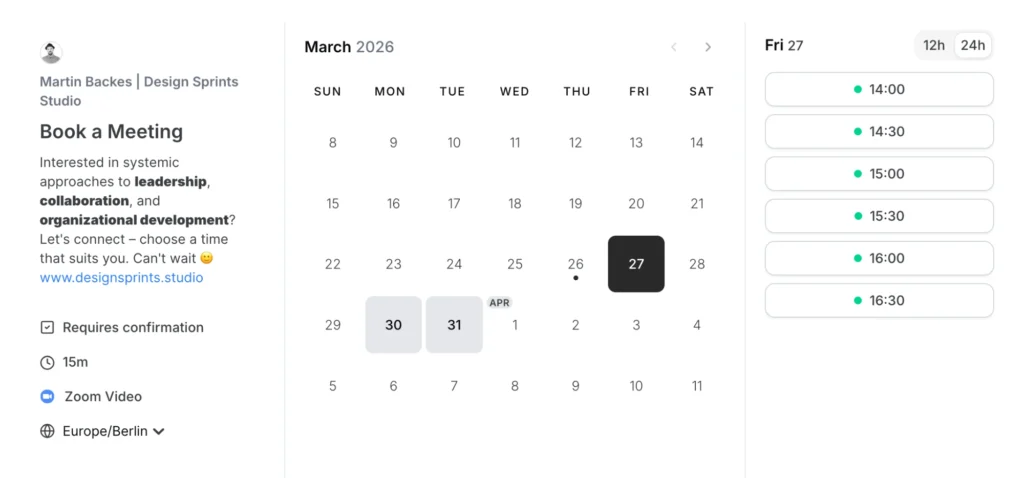
1. Scheduling
Pick a time that works for you — slots are available within the next few days.
2. Situation Analysis
You share what’s actually on your plate. We look at it together — without agenda, without diplomatic softening.
3. Your Diagnosis
You leave with concrete perspectives on your situation — whether we continue together or not.
Our first meeting is 100% free of charge and without obligation.
No pitch. No commitment. Just real value.
FAQs
Questions We Get Frequently
The questions we hear most often — answered directly. If yours isn’t here, just ask.
1. Structure, behavior, and psychodynamics — how does that fit together?
We look at structure first — decision paths, roles, communication channels, information flow. Because structure overrides behavior: the same people behave differently in different structures. That’s our primary lever.
That said, structure doesn’t explain everything. Individual patterns, blind spots, and psychodynamic processes influence how organizations function. We don’t ignore that — but we start where the leverage is highest. Organizational dynamics first, psychodynamics second.
2. What does working systemically actually mean in practice?
It means we don’t change people directly — we change the conditions that produce behavior. Concretely: we observe before we act. We treat the organization as a living system, not a machine. We look for the real leverage points, not the obvious symptoms. And we create conditions where solutions emerge from within — not imposed from above.
3. Why does this require external support — can't it be solved internally?
The people around you have reasons not to tell you what they really think. Peers are diplomatic. Teams manage up. Boards focus on outcomes. An external thinking partner has no stake in your approval — which is exactly what makes honest thinking possible. You can’t get that internally.
4. What's the difference between coaching and sparring?
Coaching is a structured development process — regular sessions over time, working on patterns, blind spots, and leadership capability. The coach guides the process; the coachee owns the direction. Sparring is more direct and situational: you bring a decision, a dilemma, or a live challenge, and we think it through together — with honest challenge and direct input. Coaching builds over time. Sparring moves fast. Most engagements use both.
5. What's the difference between this and therapy?
Therapy works with psychological history, trauma, and deep personal patterns — often over years. Coaching and sparring work with your current situation, your leadership context, and the patterns that show up in your professional life right now. If something deeper surfaces that belongs in a therapeutic context, we’ll say so directly.
6. What's the difference between coaching and consulting?
Consulting diagnoses and recommends — the consultant delivers a solution. Coaching works differently: you own the thinking, the direction, and the decisions. We bring structure, challenge, and honest outside perspective. Sparring sits between the two: we bring direct input and concrete perspective, but you remain the decision-maker.
7. How long does a coaching engagement take?
There’s no standard timeline. Meaningful development takes time — typically a minimum of 3 to 6 months for focused work, often longer for complex situations. Sparring can be shorter and more situational. We agree on a realistic scope upfront — and adjust as we learn more.
8. What if the issue turns out to be structural, not personal?
We’ll say so directly. Some of what looks like a leadership problem is actually a structural one — a coordination problem, a role clarity issue, a decision path that doesn’t work. Coaching won’t fix that. If the core issue is structural, we name it — and can extend the work into organizational development if that’s what’s actually needed.
9. Is this confidential?
Yes — completely. What happens in coaching and sparring stays between us. No reports to your organization, no summaries shared with HR or leadership. The only exception is if you explicitly request otherwise.
10. How do I know if coaching is what I actually need?
If you’re dealing with recurring patterns, unclear decisions, or a situation that keeps circling without resolution — coaching or sparring is probably useful. If the issue is primarily structural — team design, decision rights, organizational clarity — organizational development is the better entry point. The first call helps clarify which it is. Often it’s both.
11. How does the investment justify itself?
The ROI of leadership coaching is well-documented — but the real return is harder to quantify: clearer decisions, fewer recurring patterns, better use of your own judgment. The most expensive coaching is the kind that feels good but changes nothing. We design for the other kind.
12. What if I've tried coaching before and it didn't work?
Most coaching that doesn’t work stays too comfortable — it never quite names the hard thing, and nothing really shifts. If that’s your experience, it’s worth asking whether the coaching was honest enough, direct enough, and structurally aware enough to be useful. That’s the standard we hold ourselves to.
Still have a question that’s not covered here? Just reach out — by email or by booking a call directly.
CONTACT
Book Your Free Intro Call
The Most Expensive Thing in Leadership Is the Thinking That Never Gets Done.
If the same patterns keep returning despite genuine effort — the cause is almost certainly something you can’t see clearly from inside. That’s not a personal failure. It’s what happens when there’s no space honest enough, direct enough, and structurally aware enough to be useful.
If you’re ready for that kind of thinking partnership — we’d like to hear from you.
No pitch. No intake form. Just a real conversation.